
The Fake Receipt Scam in P2P: How Rushing Can Zero Out Your Crypto Wallet
Do you trust a screenshot of an instant transfer? Understand the fake receipt scam, the "recycled transfer" tactic, and the dangers of inattention when trading P2P crypto.
Cezar Pimentel
2/22/20263 min read
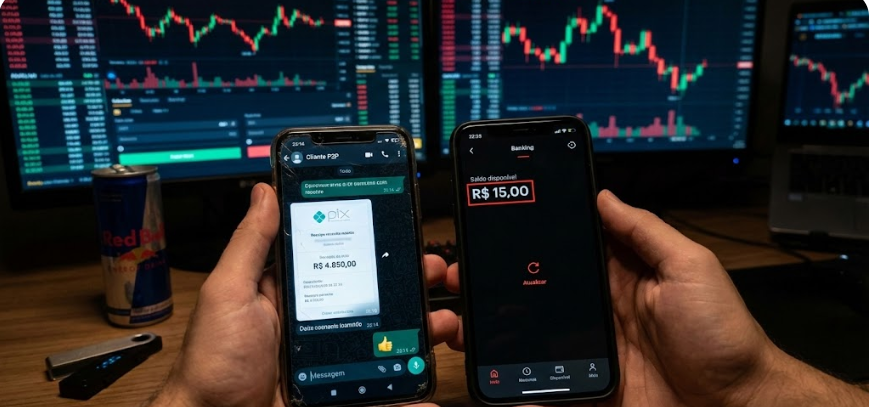
In our last text of the Money Bridge security series, we opened the black box of one of the cruelest attacks in today's financial market: The Pix Triangulation Scam (MED): The P2P Nightmare and How to Survive.
If the MED scam uses a loophole in the banking system itself against you, today's scam attacks your mind and your inattention. The Fake Receipt Scam is a classic that, unfortunately, continues to claim victims every day—from beginner investors to the most experienced P2P sellers.
In this crypto universe, practically everything is new, and you can never be too careful. I, personally, have never fallen for the Photoshop-edited receipt, but I've had my share of "wise guys" trying to test me in practice.
As a self-taught investor, I will show you the evolution of this scam, the recycled receipt tactic, and tell you about an amateur mistake I made myself that cost me dearly.
1. The Evolution of the Scam: It's No Longer Just Photoshop
In the past, you would glance at a fake receipt and immediately notice the wrong font or the crooked bank logo. Today, the game has changed. Scammers use fake apps (modified APKs) that perfectly simulate the interface of famous banks. They generate a receipt identical to the original. Banking authorities constantly warn about this, but in the heat of the moment, the image is convincing.
The scammer creates a theater of urgency: "Bro, release the crypto quick, I need to pay a bill!" or "I'm losing my internet connection, release it fast!". Under pressure, you look at the photo, see your name, and click release. Seconds later, the scammer vanishes.
2. The "Recycled Receipt" Tactic
As I said, people have tried to pull a fast one on me several times. One of the most dangerous tactics I faced doesn't use a fake receipt, but an old one.
It works like this: the client (who already bought from you days ago) opens a new order with the exact same amount. They send you the real receipt from that old purchase. It has your name, your transfer key, and the exact amount. They mark on the platform that they have paid. Your money gets held in the system (escrow) until the time expires or until you make the fatal mistake of releasing it. If you look quickly, you'll think it's a new payment.
What's the detail that saves you here? The Transaction ID. Every transfer has a unique identification code. Just checking the amount and the name is not enough; you need to cross-reference the ID on the receipt with the ID that appears on your bank statement today.
3. My Biggest Mistake: Inattention That Costs Dearly
I mentioned in The Reality of Cryptocurrencies in Brazil: From Shitcoins to the Challenge of the P2P Standard that our profit margin is squeezed. Any mistake destroys the month.
And I confess: the biggest hit I took wasn't from a fake receipt, but from my own inattention operating on autopilot. On a very busy day, I simply paid the same order twice.
The buyer noticed the double money, took the cryptos, withdrew the cash, and disappeared. The platform washed its hands and hasn't given me an answer to this day. Today I can laugh about it, but that day, my stomach churned. It took more than two full days of hard work, spinning capital non-stop, just to recover the amount lost in that fraction of a second of inattention.
4. The Unbreakable Golden Rule of P2P
If you want to survive in the crypto market and keep your planning from Organize Your Finances in 2026: 4 Practical Tips intact, you need to tattoo these rules in your mind:
The receipt is worthless: The only real proof of payment is the money showing up in the updated balance inside YOUR banking app. Refresh the page frantically if you must.
Check the Transaction ID: Don't just look at the amount. Verify if the transaction code matches the one on your bank statement to avoid recycled receipts.
Don't trade when sleepy or rushed: Inattention (like paying twice) is your worst enemy. If you are tired, turn off your ads and go to sleep.
The Next Step
Losing money due to inattention hurts much more than losing it to a market fluctuation. The financial market rewards patience and punishes rushing.
Now that you know how to shield yourself against the Fake Receipt and the MED, your operation is much stronger. If you still have doubts about where to allocate the profits from your safe trades, be sure to read our comparison Government Bonds or CDs: Where to safely invest your money in 2026?.
Always stay alert, cross-check the data, be suspicious of urgency, and happy trading!
Disclaimer: The content on Money Bridge is based on the author's real market experiences. The best form of protection is two-step verification and consulting your financial institution's official channels directly.
(Legal Notice)
Investments involve risk, and past performance is not a guarantee of future results. We do not make direct recommendations.
ConTATO


Cezar Pimentel
Crypto expert
Editor and writer for Money Bridge.
Contribute to our blog:
Wallet Lightning: knownworm12@walletofsatoshi.com
Chave Pix: 635af7b7-92ab-4b5a-a7d3-541d3fd41701
Bitcoin On-chain: 1D1dbDJiQKuLLcWCH2M2yVjArWj3yCufmn
USDT Polygon: 0xb83948456f41cb8b0f8528472558d7fe977cd4c9
USDT TRC20: TBKMFK9BGudeEsaXwL3z9dnQC8nakFrKAM
USDT BEP20: 0xb83948456f41cb8b0f8528472558d7fe977cd4c9
USDT SOL: 3afEJTg2oDbXf6diL5SUf4g87S13hyWtXcsJxde8XzAn
USDT TON: UQDeeyyGHoXCW18QcNCElonzmntgzeki3rtqqN8zZnNDMtLO
USDT Arbitrum one: 0xb83948456f41cb8b0f8528472558d7fe977cd4c9
Acceptance of Terms – Money Bridge