
The Limit War: Why Banks Treat Crypto P2P as Criminal
Banks canceling accounts of those who trade crypto? Understand why P2P is treated as a risk and see the golden accounting tip to shield your operation.
Cezar Pimentel
2/23/20263 min read
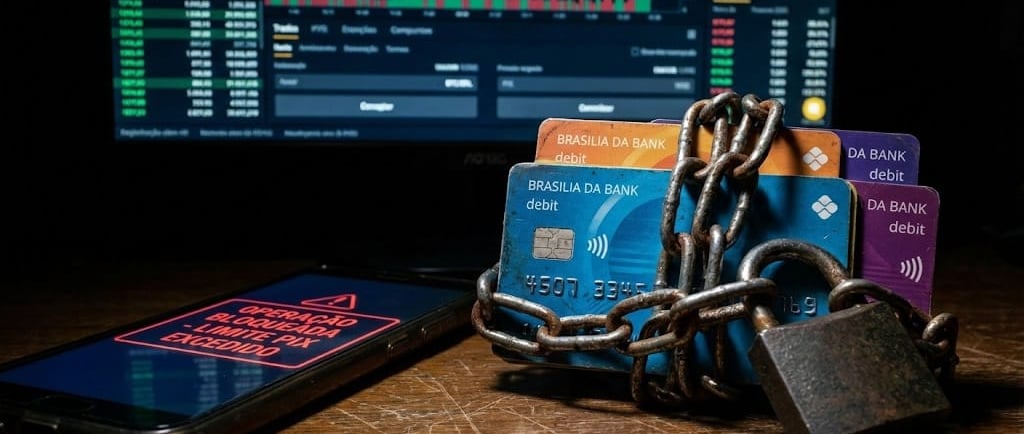
I've had several experiences in the crypto world. I've lost money with shitcoins, traded complex contracts in decentralized finance (DeFi), and I can tell you: one of the most profitable ways, quote-unquote, to raise capital today is by operating as a P2P (Peer-to-Peer) trader.
But when you decide to professionalize this operation, you hit a giant concrete wall: the banking system.
We've already talked about taxes in The Reality of Cryptocurrencies in Brazil: From Shitcoins to the Challenge of the P2P Standard, and we've opened the black box of scammers in The Pix Triangulation Scam (MED): The P2P Nightmare and How to Survive and The Fake Receipt Scam in P2P: How Rushing Can Zero Out Your Crypto Wallet.
But what happens when the enemy wears a suit, a tie, and cancels your account without prior notice? Today, Money Bridge will expose the harsh reality of trying to work honestly with crypto.
1. The P2P Seller and "Geriatric Legislation"
Running a P2P operation on a Personal bank account is like playing Russian roulette. The Central Bank has strict AML (Anti-Money Laundering) rules.
Since your volume of received and sent instant payments falls outside the common pattern, the banks' rigid algorithms panic. They mistakenly assume you are laundering money. That's right: you, a professional in the field who pays taxes and files declarations correctly, are equated by the algorithm to a drug dealer, mobster, or criminal.
And when you least expect it, the email arrives: "Your account has been blocked due to commercial disinterest." Your money is refunded to the origin accounts or gets locked up for months. And get this! The harsh reality of this outdated and "geriatric" legislation is that this happens with both Personal and Business accounts. It doesn't matter if you opened the company by the book, paid your taxes, and have the correct business activity code. To the bank, you are a risk.
2. The Dilemma: Digital, Traditional, and International Banks
Where to open an account, then? The landscape is a minefield:
Digital Banks: Most run away from clients who trade crypto because they don't want to deal with the high volume of fraud claims and chargebacks.
Traditional Big Banks: They might accept you, but they want an arm and a leg, charging sky-high maintenance fees and tariffs for business transfer packages.
Global Accounts (Wise, Revolut, Nomad): If these platforms even dream that the money you are sending or receiving comes from crypto P2P operations, brace your patience. They will close your account on the spot out of fear that you are an international drug trafficker. Because of real criminals, we are prevented from expressing the full potential of our category.
3. How to Survive the Banking Wall (Golden Tips)
As a self-taught trader who has had many doors slammed in my face by bank managers, I learned that you don't fight the bank; you play by their rules using the right paperwork. Here are the tips that many accountants charge a premium to give you:
Redundancy is Your Life: Never depend on just one bank. Have multiple accounts (both in banks and financial platforms). If one bank freezes your limit or blocks your account, you shift the operation to the others, and your business doesn't stop spinning.
The Revenue Projection (The Golden Tip): The bank manager doesn't understand Bitcoin; they understand paper. Ask your accountant to prepare a "Revenue Projection for the next 12 months," properly signed by them. Take this to the bank. It's not a 100% guarantee, but it is the weightiest document to help you get decent operational limits.
Outsource the Bank Hunt: Don't waste time knocking from door to door. Hire a crypto-specialized accountant. These professionals already have dozens of P2P clients and know exactly which managers and which banks offer legal support and understand our profession in the current landscape.
The Next Step
The traditional financial ecosystem was not built to make life easier for the cryptocurrency investor. It requires resilience, impeccable accounting organization, and a strong stomach to deal with account blocks.
If you've managed to organize your operation, shield your accounting, and are starting to turn a profit, the next vital step is to take your coins off the exchanges. Stay tuned, because the next Money Bridge article will be about the final step in security: how to self-custody your wealth.
Disclaimer: The content of this article is a practical account of the banking challenges in P2P operations and does not replace professional financial or accounting advice. Managing relationships with financial institutions is the individual responsibility of the user.
(Legal Notice)
Investments involve risk, and past performance is not a guarantee of future results. We do not make direct recommendations.
ConTATO


Cezar Pimentel
Crypto expert
Editor and writer for Money Bridge.
Contribute to our blog:
Wallet Lightning: knownworm12@walletofsatoshi.com
Chave Pix: 635af7b7-92ab-4b5a-a7d3-541d3fd41701
Bitcoin On-chain: 1D1dbDJiQKuLLcWCH2M2yVjArWj3yCufmn
USDT Polygon: 0xb83948456f41cb8b0f8528472558d7fe977cd4c9
USDT TRC20: TBKMFK9BGudeEsaXwL3z9dnQC8nakFrKAM
USDT BEP20: 0xb83948456f41cb8b0f8528472558d7fe977cd4c9
USDT SOL: 3afEJTg2oDbXf6diL5SUf4g87S13hyWtXcsJxde8XzAn
USDT TON: UQDeeyyGHoXCW18QcNCElonzmntgzeki3rtqqN8zZnNDMtLO
USDT Arbitrum one: 0xb83948456f41cb8b0f8528472558d7fe977cd4c9
Acceptance of Terms – Money Bridge